Live Darshan
Temple timings: 1930 to 1230 (next day) Eastern Time; 1830 to 1130 (next day) Central Time, 1630 to 930 (next day) Pacific Time
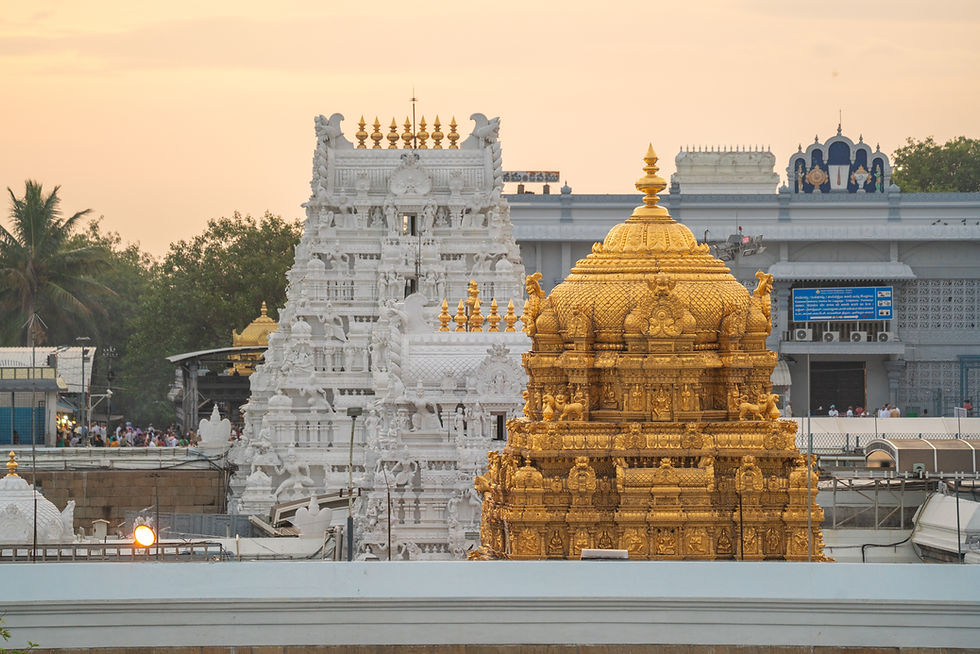
Perched on the Seshachalam Hills at Tirumala in Andhra Pradesh, the Sri Venkateswara temple is one of Hinduism's most revered Vaishnava shrines. Lord Venkateswara, also worshipped as Srinivasa, Balaji and Govinda, is regarded as a manifestation of Vishnu who descended to earth for the welfare of humanity.
Sthala Mahatmyam: The seven Tirumala hills are traditionally identified with the seven hoods of Adisesha, with the principal shrine standing on Venkatadri. According to the sacred tradition, Vishnu came to this region as Srinivasa and eventually married Padmavati, daughter of King Akasa Raja. The Lord is believed to have remained at Tirumala to protect devotees during Kali Yuga, giving rise to the description Kaliyuga Pratyaksha Daivam—the manifest deity of the present age. The sacred Swami Pushkarini beside the temple is integral to the kshetra's religious tradition.
Situated amid the Nallamala Hills on the banks of the Krishna in Andhra Pradesh, Srisailam is exceptional because it is revered both as one of the 12 Jyotirlingas and as a major Shakti Peetha. Shiva is worshipped as Mallikarjuna and Parvati as Bhramaramba Devi.
Sthala Mahatmyam: Tradition relates that Shiva and Parvati came to this mountain to console their son Kartikeya, who had withdrawn to Krauncha mountain following a disagreement involving his brother Ganesha. Shiva subsequently manifested here as Mallikarjuna. Another tradition associates the name with Princess Chandravati's worship of Shiva with mallika (jasmine) flowers. Srisailam is therefore regarded as a rare kshetra where the worship of Shiva and Shakti is inseparably united. It also has Bhramarambika temple, which is one of Shaktipeethas in the country.

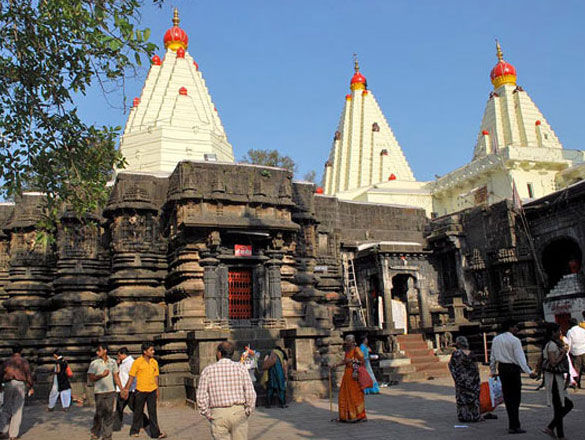
The ancient Mahalakshmi Temple at Kolhapur in Maharashtra, where the Goddess is affectionately called Ambabai, is one of India's foremost Shakti shrines. The temple is associated with the Karavira Kshetra described in sacred tradition.
Sthala Mahatmyam: According to the Karavira Mahatmya, the Goddess destroyed the demon Kolhasura, who had oppressed the region. Before his death, Kolhasura requested that the place should bear his name, providing the traditional explanation for "Kolhapur". Another popular tradition says Mahalakshmi left Vaikuntha and settled at Karavira following a disagreement with Vishnu. A celebrated feature of the temple is Kirnotsav, when the setting sun's rays enter the sanctum and illuminate the deity on particular days of the year.
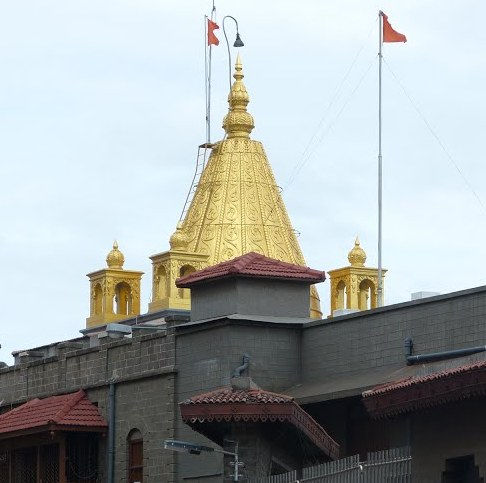
Shirdi in Maharashtra became one of India's great pilgrimage centres through the life of Sai Baba of Shirdi, the spiritual master who lived there for much of his life and taught faith, patience, charity and religious harmony. His celebrated teachings are encapsulated in Shraddha and Saburi—faith and patience.
Sthala Mahatmyam: Unlike the ancient puranic kshetras, Shirdi's sanctity derives principally from Sai Baba's life and presence there. Tradition records his association with places including the Neem tree at Gurusthan, Dwarkamai mosque and Chavadi. Sai Baba attained Mahasamadhi in 1918 and his mortal remains were interred in what became the Samadhi Mandir. Devotees regard Shirdi as a place where Baba's spiritual presence continues to answer sincere prayer.
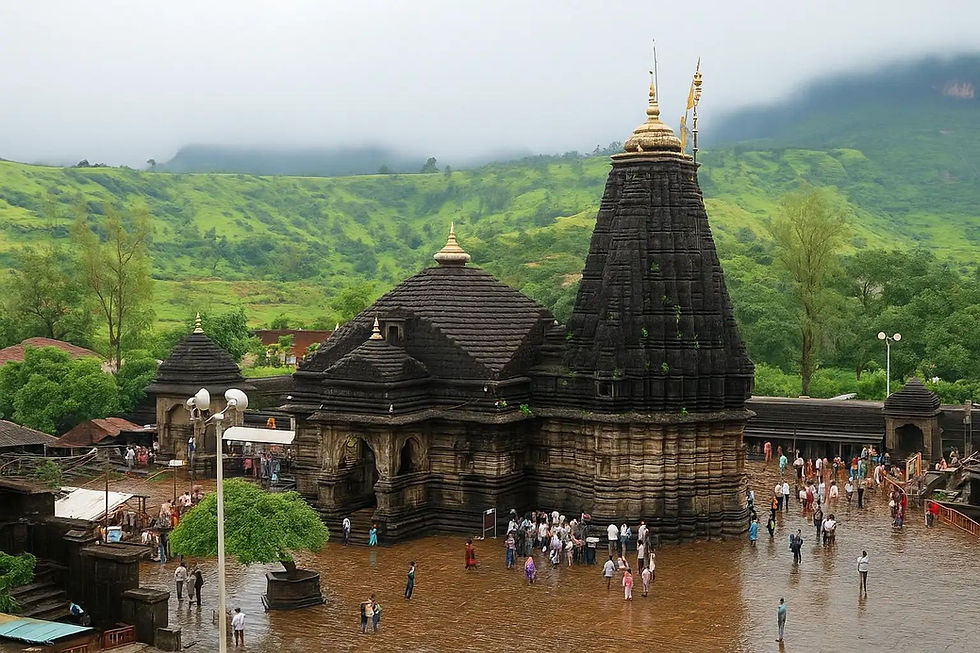
The Trimbakeshwar Shiva Temple, situated at Trimbak near Nashik in Maharashtra, is one of the 12 Jyotirlingas. Surrounded by the Brahmagiri hills, the temple is associated with the origin of the Godavari, one of India's holiest rivers. The present temple, built largely of black stone, dates to the Peshwa period.
Sthala Mahatmyam: According to sacred tradition, sage Gautama Maharshi and his wife Ahalya performed penance here. Following circumstances that caused Gautama to seek purification from the sin of cow-killing, he prayed to Shiva and requested that the sacred Ganga descend to the region. Shiva granted his prayer, and the river manifested as the Godavari, also called Gautami. Shiva then consented to remain at the kshetra as Trimbakeshwar. The Jyotirlinga here is distinctive in tradition for its association with the Trimurti—Brahma, Vishnu and Shiva.
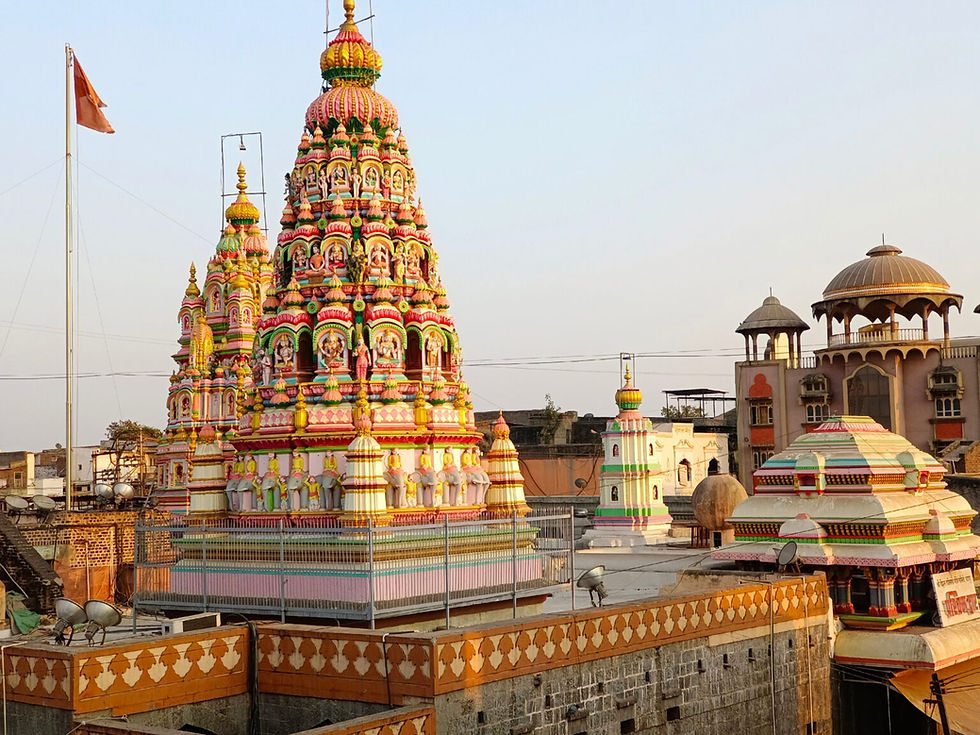
The Sri Vitthal-Rukmini Temple at Pandharpur in Maharashtra is one of India's great centres of the Bhakti tradition and the spiritual heart of the Varkari Sampradaya. The principal deity, Vitthal or Vithoba, is regarded as a manifestation of Lord Krishna-Vishnu and is depicted standing with his hands on his hips. His consort is worshipped as Rukmini, or Rakhumai. Pandharpur stands on the banks of the Bhima river, which curves here like a crescent moon and is consequently known as Chandrabhaga.
Sthala Mahatmyam: The most celebrated tradition of Pandharpur centres on the devotee Pundalik. According to the legend, Pundalik became deeply devoted to serving his aged parents. Lord Krishna came to see him, but Pundalik, unwilling to interrupt his service to his parents even for the Lord, threw a brick towards Krishna and asked him to stand upon it and wait. Impressed by Pundalik's devotion, Krishna remained standing on the brick, his hands placed upon his hips. The Lord subsequently granted Pundalik's request that he remain there permanently for the benefit of devotees.
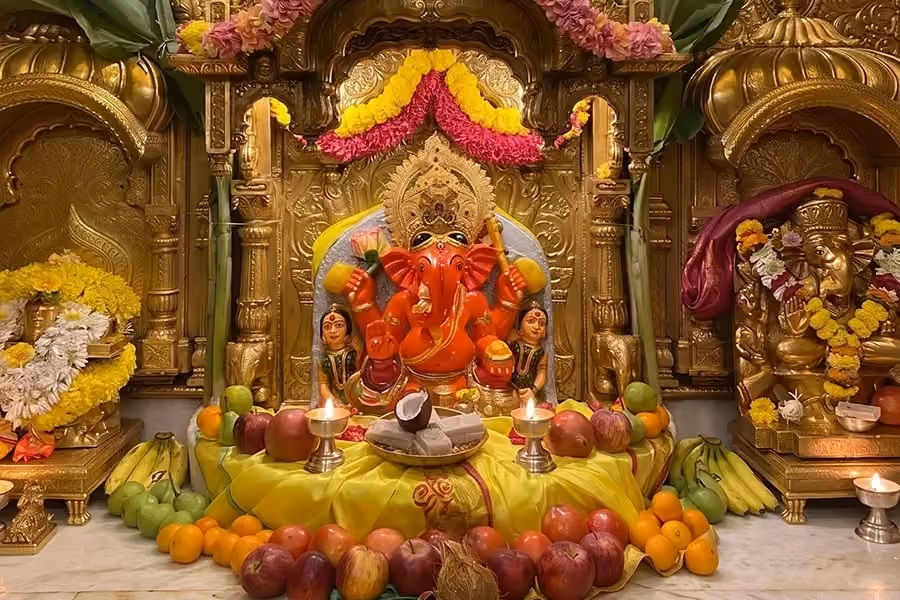
The Shree Siddhivinayak Ganapati Temple at Prabhadevi in Mumbai is among India's best-known temples dedicated to Lord Ganesha. Unlike the ancient Jyotirlinga kshetras, its documented history is comparatively recent: the original shrine was consecrated in 1801, traditionally associated with Laxman Vithu Patil and Deubai Patil.
Sthala Mahatmyam: Tradition holds that Deubai Patil, who was childless, desired a temple where other women could pray to Ganesha for children and fulfilment of their wishes. The deity consequently came to be revered as Siddhivinayak, the Ganesha who grants siddhi—success, accomplishment and fulfilment.The murti is particularly distinctive. Lord Ganesha's trunk turns to the right, a form traditionally regarded as especially powerful and requiring rigorous worship.
The Mahakaleshwar Temple at Ujjain in Madhya Pradesh is one of the 12 Jyotirlingas. Shiva is worshipped here as Mahakala—the Lord of Time and Death. The shrine is particularly noted for its south-facing, or dakshinamukhi, Jyotirlinga and the celebrated Bhasma Aarti.
Sthala Mahatmyam: Traditional accounts describe Ujjain, ancient Avantika, as being threatened by a demon, whereupon Shiva appeared in his terrifying Mahakala form in response to the prayers of his devotees and destroyed the evil force. At their request, he remained in Ujjain as Mahakaleshwar. The deeper symbolism is powerful: since Kala means time and Mahakala is the master of time itself, worship here represents seeking refuge in that which transcends birth, death and temporal existence.

The magnificent Somnath Temple at Prabhas Patan in Gujarat, overlooking the Arabian Sea, houses one of the 12 Jyotirlingas of Shiva. "Somnath" means Lord of Soma (the Moon).
Sthala Mahatmyam: According to tradition, Chandra (Soma) married the 27 daughters of Daksha but showed particular affection for Rohini. Angered by this partiality, Daksha cursed Chandra to lose his radiance. Chandra worshipped Shiva at Prabhasa, and Shiva relieved him of the curse, traditionally explaining the Moon's cycle of waning and waxing. Shiva manifested here as Somnath. The kshetra is also associated with Krishna's final earthly phase, making the wider Prabhasa region sacred to both Shaiva and Vaishnava traditions.

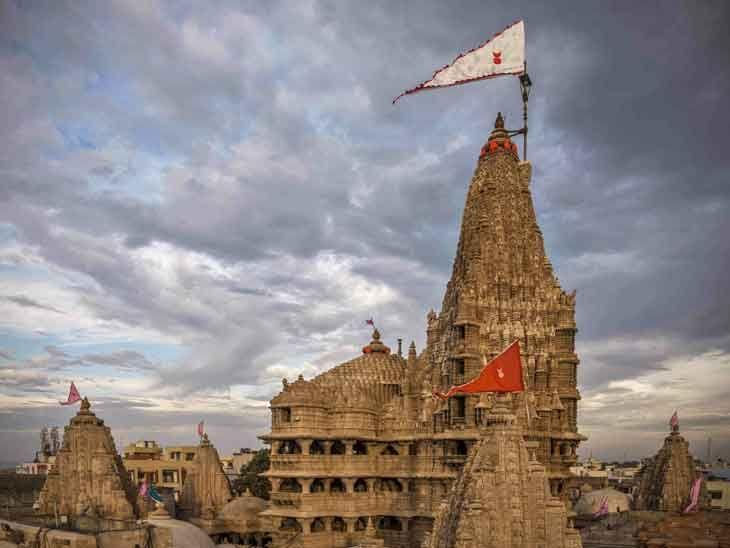
The Dwarkadhish Temple at Dwarka in Gujarat, also called Jagat Mandir, is dedicated to Krishna as the King of Dwarka. Dwarka is one of the four principal Char Dham pilgrimage centres and one of the traditional Sapta Puri, the seven sacred cities associated with liberation.
Sthala Mahatmyam: According to the Mahabharata and later sacred traditions, Krishna moved his kingdom from Mathura to the western coast and established the magnificent city of Dvaraka. After Krishna's departure from the earthly world, the ancient city is traditionally said to have been submerged by the sea. The present sacred landscape preserves the memory of Krishna not principally as the child of Gokul, but as Dwarkadhish—the statesman, king and Lord of Dwarka.
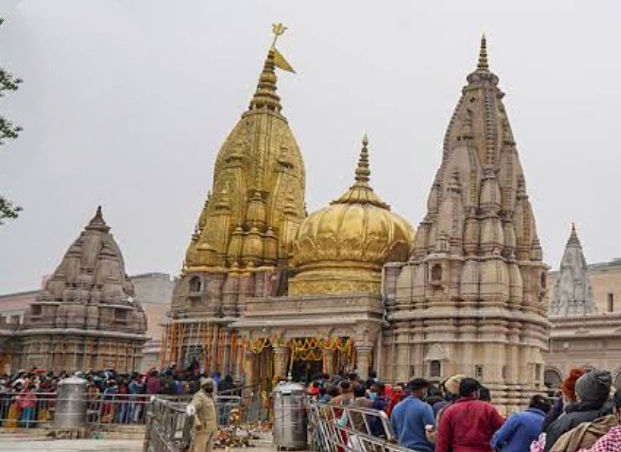
On the banks of the Ganga in Varanasi (Kashi) stands the Kashi Vishwanath temple, dedicated to Shiva as Vishwanatha—Lord of the Universe. It is counted among the 12 Jyotirlingas and is one of Hinduism's most sacred pilgrimage destinations.
Sthala Mahatmyam: Kashi is traditionally described as Avimukta Kshetra, the place Shiva never abandons. Sacred literature holds that the city rests under Shiva's special protection and that death in Kashi can lead to liberation, with Shiva believed to impart the liberating Taraka mantra to the departing soul. Tradition intimately connects Vishwanath darshan with the sacred Ganga. Hence Kashi represents not merely a temple but the Hindu spiritual ideal of the journey from mortality towards moksha.
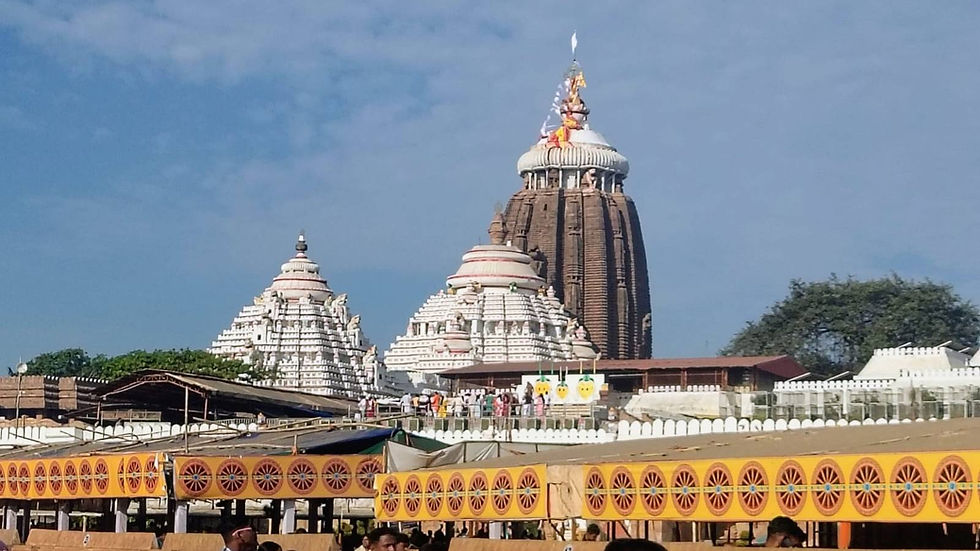
The Jagannath Temple at Puri, Odisha, is one of India's four traditional Char Dham pilgrimage centres. The principal deities—Jagannath, Balabhadra and Subhadra—are worshipped in distinctive wooden forms. Jagannath, "Lord of the Universe", is identified principally with Vishnu-Krishna.
Sthala Mahatmyam: Sacred tradition associates the kshetra, known as Purushottama Kshetra or Sri Kshetra, with King Indradyumna's search for the mysterious deity Nilamadhava. After Nilamadhava disappeared, the king was divinely instructed to establish the worship of Jagannath. Tradition holds that the divine forms were fashioned from sacred wood. The periodic Nabakalebara, when new wooden forms are consecrated according to elaborate ritual, reflects this distinctive tradition. Puri's world-famous Ratha Yatra symbolically brings the Lord out of the sanctum among all people.