Telangana Plans Excavation at 4,000-Year-Old Megalithic Site at Mudumal

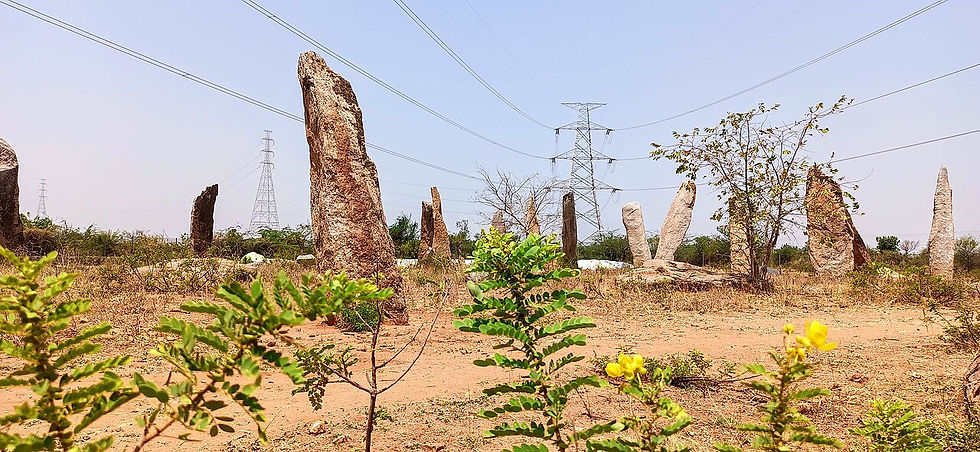
HYDERABAD: Telangana archaeology authorities are preparing to excavate the ancient megalithic landscape at Mudumal in Narayanpet district, a site of standing stones, prehistoric burials and astronomical representations that has already gained international recognition through inclusion on India's UNESCO World Heritage Tentative List.
The planned archaeological investigation represents an important new stage in the study of Mudumal, where researchers believe the arrangement of menhirs and markings on rocks could provide evidence of how prehistoric communities observed celestial events thousands of years ago.
Mudumal lies near the Krishna River, about four kilometres southwest of Mudumal village in Narayanpet district. India formally submitted the Mudumal Megalithic Menhirs to UNESCO's World Heritage Tentative List on February 11, 2025, under cultural criteria.
Mudumal contains a remarkable concentration of menhirs, large stones deliberately erected upright by prehistoric communities, as well as stone circles and burial features.
UNESCO's Tentative List documentation says the archaeological landscape dates approximately 3,500 to 4,000 years and includes more than 1,000 boulders forming different alignments.
Researchers have interpreted some arrangements of the stones as corresponding with the rising and setting of the sun during the summer and winter solstices. A cuboid-shaped rock at the summit of the hillock bears a pattern of cup marks interpreted as a representation of Ursa Major.
The standing stones continue to have meaning for communities living around the site. According to the UNESCO documentation, local people refer to the menhirs as Niluralla Thimmappa, while one particular menhir is worshipped as Goddess Yellamma.
Mudumal's presence on UNESCO's Tentative List is significant, but it should not be confused with inscription as a UNESCO World Heritage Site. As of October 2026, it remains a Tentative List property.
For Telugu readers in the United States, the site offers another dimension to Telangana's cultural history: evidence of communities living in the Krishna River landscape thousands of years before the medieval kingdoms that dominate much of the state's better-known architectural heritage.


Comments