ASI Restores Chola-Era Shiva Temple at Eruru Near Andhra Coast

Updated: Oct 3
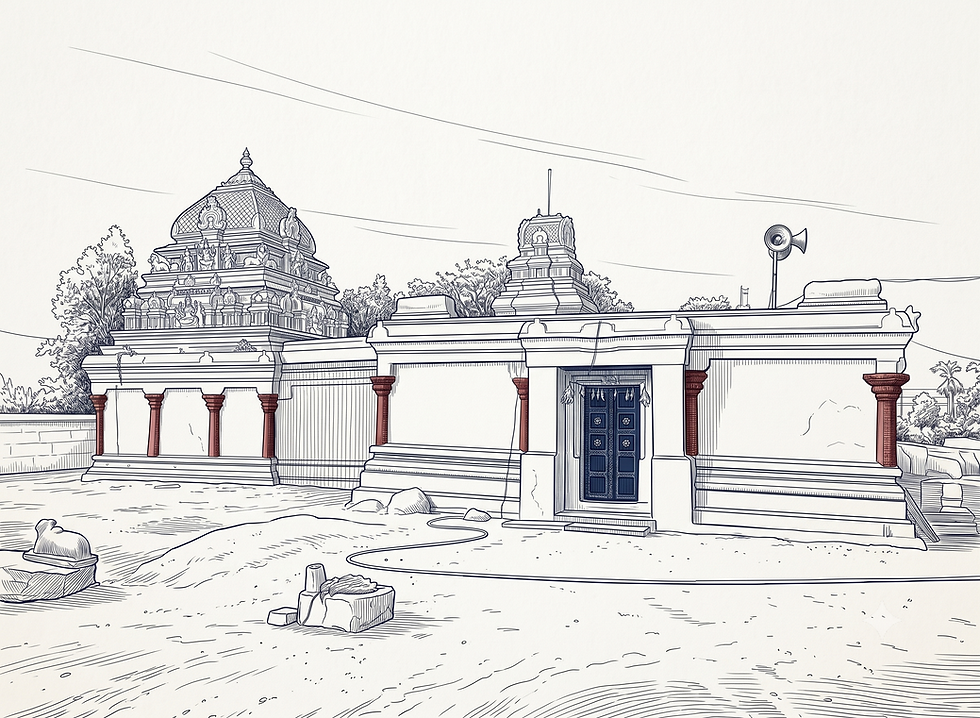
NELLORE: An ancient Shiva temple near the Bay of Bengal in Andhra Pradesh is receiving a new lease of life as the Archaeological Survey of India undertakes conservation of a little-known monument containing medieval Tamil inscriptions and architectural evidence of the region's Chola-era past.
The Sri Gnana Prasunamba Sameta Kalahastiswara Temple stands at Yeruru village in Chillakuru mandal, in the Nellore region, roughly 25 kilometres from Gudur railway junction and about 12 kilometres from the Bay of Bengal. Built in the Dravidian architectural tradition and associated with the later Chola period, the temple remains an active place of worship while also preserving archaeological evidence dating back centuries.
ASI's Amaravati Circle has undertaken conservation of the monument, with official Government of India procurement records placing the value of the conservation package at Rs 67.41 lakh. The tender provides a 210-day period for the work.
One of the temple's most important historical features is a 13-line Tamil inscription dated to approximately the 12th-13th centuries CE. The inscription records donations made to the temple, providing documentary evidence of religious patronage during the medieval period.
The presence of Tamil epigraphy is particularly relevant to understanding the history of southern coastal Andhra Pradesh. Chola power and Tamil-speaking administrative and religious networks extended into parts of present-day Andhra Pradesh, leaving inscriptions and architectural traditions across the region.
Eruru lies only around 12 kilometres from the Bay of Bengal, placing the temple within the coastal landscape of southern Andhra Pradesh. The broader Nellore coast has historically been connected with maritime commerce and routes linking inland settlements with ports along the Coromandel Coast.
The official ASI tender also describes the Eruru temple as an unprotected monument. In this context, unprotected means the monument does not have the same statutory designation as a centrally protected monument, not that it lacks historical importance.
For Telugu Americans, Eruru illustrates the deep cultural interaction between Telugu and Tamil regions along the southern Andhra coast and demonstrates how Chola-period influence survives far beyond Tamil Nadu.


Comments