Hunt for Lost Gold Along Munneru: Ancient Temples Fuel a New Search

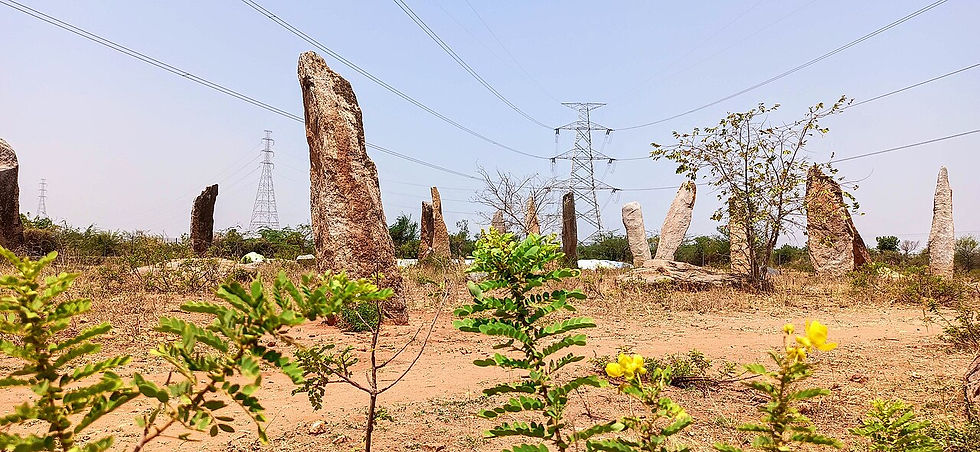
VIJAYAWADA: On the banks of the Munneru in Andhra Pradesh's NTR district, more than 20 people can be seen digging into the earth, carefully examining what they uncover and moving from one promising spot to another.
They are not prospecting for a natural gold deposit.
The families, who have come from the Puttur area, are searching for something very different: old gold and valuables they believe may have survived underground from settlements and temples that once flourished along this historic stretch of the Munneru.
An Eenadu report published October 2 said the families had arrived around the Rangapuram-Bangaram area and were carrying out their traditional search. Some have reportedly followed the practice for generations, travelling to places where they believe old settlements or religious sites could have left valuable objects underground.
What might initially sound like little more than a treasure hunt has an intriguing historical backdrop.
More Than 100 Temples: Official Record Supports Local Tradition
One of the most striking claims in the local account is that the wider area once contained more than 100 temples.
There is independent support for that claim.
The NTR District Survey Report, prepared with Andhra Pradesh government agencies, specifically records that Penuganchiprolu has more than 101 temples and describes it as one of Andhra Pradesh's important pilgrimage centres.
Penuganchiprolu lies along the Munneru in NTR district, in the same wider river corridor where the present-day searches are being reported.
The official district document also confirms the geography of the river. The Munneru passes through the Nandigama, Kanchikacherla and Penuganchiprolu mandals of NTR district before joining the Krishna River near Eturu.
That does not prove that gold lies buried beneath the locations now being dug. But it does establish that the searchers' stories about an unusually temple-rich landscape have a genuine historical-geographical basis.
Archaeology Shows the Munneru Banks Have a Much Older Past
There is an even more significant piece of evidence.
Records of the Archaeological Survey of India (ASI) show that archaeologists identified material from the early historic period at sites on the banks of the Munneru decades ago.
The ASI's Indian Archaeology 1961-62 — A Review records archaeological exploration around Vijayawada and the then Krishna district.
At Mungasala and Kisara on the Munneru, archaeologists found pottery belonging to the early historic period. Mungasala also yielded a Neolithic implement, indicating human activity extending even further into the past.
A separate archaeological reference on India's Neolithic cultures likewise records the discovery of Neolithic implements at Mungasala on the Munneru.
These findings do not establish a buried-gold site. They do, however, demonstrate that parts of the Munneru corridor were occupied by people long before the modern settlements seen there today.
That archaeological history makes the story more than simply one about families digging in a riverbed.
Why Search for Gold?
The logic behind the families' search appears to come from a combination of history, local memory and experience.
Temples traditionally accumulated valuable objects through donations and religious use, including ornaments and precious metals. The searchers therefore believe that places associated with former temples or settlements could occasionally yield tiny pieces of old gold or other valuables.
The Eenadu account also refers to idols having been found in the area during earlier digging and construction activity.
That claim is important to the story because such discoveries could help explain why families continue returning to the area.
However, independent archaeological or government documentation confirming the specific idol discoveries described in the Eenadu account could not be located. They should therefore be attributed to the newspaper/local accounts rather than presented as an established archaeological finding.
Likewise, there is no evidence in the material reviewed that archaeologists have identified a cache of temple gold beneath the area.
A Tradition Passed Through Families
For the people doing the digging, however, the search is reportedly not a new hobby triggered by a rumour.
According to the Eenadu account, some of the families have practised this kind of searching for generations.
More than 20 people from the community are currently involved, including men and women. Some reportedly arrived two or three months ago and have been staying in the Munneru area while continuing their search.
Their method is based on identifying places they consider promising, digging into the ground and examining the material they remove.
When a location produces nothing, they move elsewhere.
The activity resembles a traditional itinerant occupation: families travel to locations associated with older habitation and continue searching as long as they believe there is a reasonable possibility of recovering something valuable.
The supplied report identifies them as families who came from Puttur. However, reliable independent documentation explaining the history of this particular community and establishing how long the occupation has been practised could not be found.
The Munneru Is Also a Working River
The landscape these families are searching is not an untouched archaeological zone.
The Munneru remains an economically active river system.
An Andhra Pradesh Pollution Control Board report submitted to the National Green Tribunal describes the Munneru as a left-bank tributary of the Krishna and confirms that it flows through Nandigama, Kanchikacherla and Penuganchiprolu mandals before joining the Krishna at Eturu.
The same official filing lists several authorised sand reaches along the Munneru, including locations at Penuganchiprolu and other nearby villages.
That creates an unusual overlap: an active river landscape subjected to sand extraction and other modern activity also contains places with documented archaeological antiquity.
Treasure Hunt — But Not Evidence of a Gold Deposit
The distinction is important.
Nothing found in the geological or archaeological material reviewed indicates that the families are exploiting a newly discovered natural gold deposit in the Munneru.
Nor is there evidence that the government or ASI has identified buried temple treasure at the locations currently being searched.
Instead, the story is about people following a traditional occupation based on the possibility of recovering old, human-made valuables from a landscape with a long history of settlement and religious activity.
And at least two parts of the historical narrative surrounding their search can now be independently substantiated: the official NTR district survey records more than 101 temples at Penuganchiprolu, while ASI records confirm early historic and even Neolithic archaeological material from sites along the Munneru.
Whether the families actually find the gold they seek is another question.
But the history beneath their feet is real.


Comments