Telangana, Maharashtra Talk on 152-Metre Barrage to Move Water by Gravity
Telangana has sought to convince Maharashtra that increasing the reservoir level would not inundate any villages.

HYDERABAD: Telangana is pressing Maharashtra to permit a 152-metre full reservoir level at the proposed Tummidihatti barrage, arguing that the additional height would allow it to move nearly 80 tmcft of Pranahita water toward the Godavari system largely by gravity instead of relying on power-intensive pumping.
The proposal was discussed at a Central Water Commission-facilitated meeting between officials of the two states in New Delhi on September 1. No agreement was reached, and another round of discussions is expected in about three weeks. Maharashtra’s concerns over land submergence and the amount of water that can reliably be used from the Pranahita system remain among the principal issues requiring examination.
Telangana wants Maharashtra to reconsider the 148-metre full reservoir level agreed between the states in 2016 and allow the barrage to operate at 152 metres. The Telangana government says the higher level is crucial because a barrage at 148 metres would not provide the elevation needed to transfer the desired quantity of water by gravity. The state has previously told the Union Jal Shakti Ministry that a 150-to-152-metre level would reduce the need for pumping and the accompanying electricity costs.
At the latest interstate meeting, Telangana said a 152-metre structure could enable it to draw about 80 tmcft a year, compared with roughly 43 tmcft at the lower level, while preserving Maharashtra’s water entitlements. That assertion forms part of Telangana’s technical case and has not yet been accepted by Maharashtra or formally endorsed as the outcome of the CWC talks.
A tmcft, or thousand million cubic feet, is a unit commonly used to measure reservoir and irrigation water in India.
Gravity route to Sundilla
Under the concept presented by Telangana, the new Tummidihatti headworks would consist of two connected sections — one across the Wardha and another across the Wainganga — near the rivers’ confluence, which forms the Pranahita.
Water would then be conveyed toward the Sundilla barrage on the Godavari through a combination of gravity canals and a tunnel. According to details of Telangana’s presentation reported by Deccan Chronicle, the alignment envisages a roughly 77-kilometre gravity canal, a 20.9-kilometre tunnel and a further 8.25-kilometre gravity canal before reaching Sundilla.
Sundilla is one of the three barrages built as part of the Kaleshwaram Lift Irrigation Scheme, along with Medigadda and Annaram. The proposed Tummidihatti-to-Sundilla connection is part of the Congress government’s broader effort to revive elements of the earlier Dr. B.R. Ambedkar Pranahita-Chevella project while making use of infrastructure already created under Kaleshwaram.
The original Pranahita-Chevella proposal envisaged a barrage at Tummidihatti with an FRL of 152 metres and the diversion of 160 tmcft of water. Maharashtra objected to the extent of submergence on its side, and after several rounds of talks the two states agreed in August 2016 to an FRL of 148 metres. Telangana subsequently shifted the principal water source downstream to Medigadda while developing the redesigned Kaleshwaram project.
Submergence remains key hurdle
Telangana has sought to convince Maharashtra that increasing the reservoir level would not inundate any villages. Telangana put total submergence at 1,506 acres for the 148-metre proposal, including 295 acres associated with the eco-sensitive zone of Maharashtra’s Chapral Wildlife Sanctuary.
At 152 metres, Telangana’s presentation put the affected area at 3,875 acres, of which it said 2,156 acres would be riverbed and 545 acres would be land associated with the sanctuary. The state presented Maharashtra with submergence estimates for each one-metre increase in FRL between 148 and 152 metres. These figures represent Telangana’s presentation and have not yet been jointly accepted by the two states.
There is also a discrepancy in publicly reported submergence numbers. Before the talks, The New Indian Express, citing Central Water and Power Research Station studies, reported about 1,150 acres of submergence in Maharashtra at 148 metres and more than 2,500 acres at 152 metres. The difference may relate to what categories or geographic areas each calculation includes, but available public material does not provide enough detail to reconcile the figures conclusively.
The CWC has asked Telangana to provide Maharashtra with the submergence studies and supporting project material so Maharashtra’s technical officials can examine them before the next round of negotiations. Water availability and safeguards for the interests of both states will also require further scrutiny.
Telangana estimates the project in its current form could cost about ₹12,300 crore, although the final design and expenditure would depend heavily on the reservoir level eventually accepted by Maharashtra. A lower FRL could require changes to the conveyance system, including additional lifting arrangements.
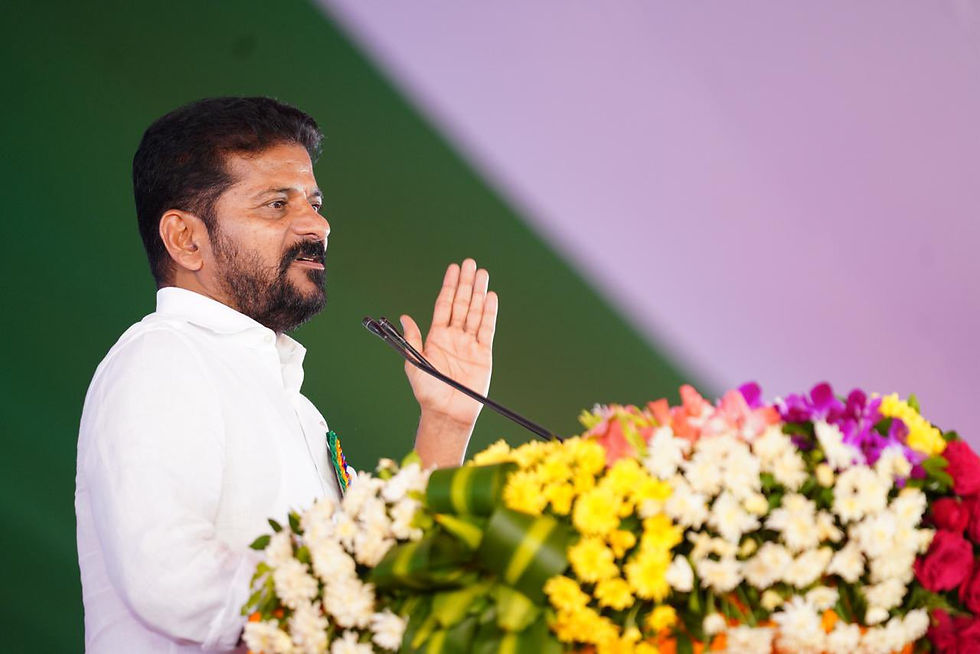
For Telangana, the stakes extend beyond the engineering design. Chief Minister A. Revanth Reddy has presented the revived Tummidihatti project as an important source of irrigation for the erstwhile Adilabad region and has repeatedly sought the Centre’s help in securing an agreement with Maharashtra.
The September 1 meeting therefore marked progress in reopening formal technical negotiations but did not amount to Maharashtra approving the 152-metre barrage. The next round of CWC-facilitated talks is expected to focus more closely on submergence data, reliable water availability and the conditions Maharashtra may seek before agreeing to a revised reservoir level.


Comments