Gold Seen Averaging $6,000 by End-2026 Despite Near-Term Lull
On the downside, gold does not generate interest or other cash yield. It therefore becomes relatively less attractive when returns on competing assets such as US Treasuries and money-market instruments rise.
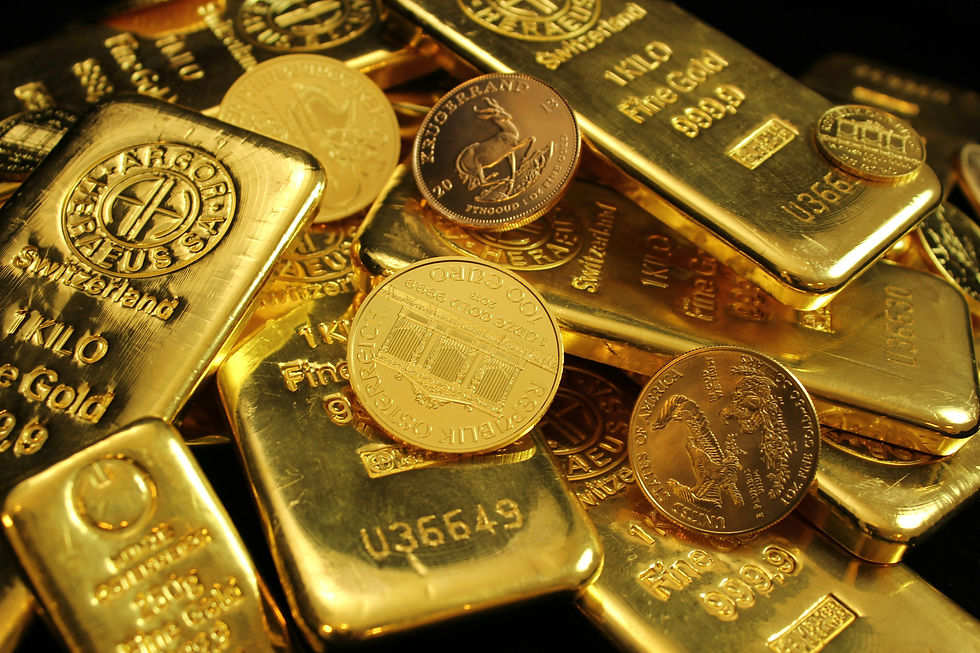
Gold’s powerful rally at the start of 2026 has lost momentum in recent months, but J.P. Morgan Global Research continues to see substantial upside for the precious metal, forecasting prices to average about $6,000 an ounce in the final quarter of this year and move towards $6,300 by the end of 2027.
Gold rose steadily during the opening weeks of 2026 and peaked in late January before retreating in March. More recently, the spot price touched an intra-year low of about $4,170 an ounce and has largely moved sideways.
The consolidation has come amid conflicting forces. Geopolitical tensions, trade concerns and shifts in central-bank demand have supported gold, while expectations of persistently high interest rates and the possibility of further monetary tightening in the US have weighed on investor appetite.
J.P. Morgan has nevertheless retained a bullish longer-term outlook, although it has trimmed its earlier forecasts. The bank now expects gold to average $5,300 an ounce in the third quarter and $6,000 in the fourth quarter of 2026. Its full-year 2026 average forecast has been lowered to $5,243 from the $5,708 projected in February.
For 2027, J.P. Morgan expects prices to average $6,263 an ounce, with quarterly averages ranging from $6,200 in the first quarter to $6,300 in the second half.
Greg Shearer, head of Base & Precious Metals at J.P. Morgan, said gold was currently caught between important technical levels, trading above its 200-day moving average of about $4,340 but below its 50-day moving average of roughly $4,730.
Investor enthusiasm has also weakened as markets consider whether higher energy prices could sustain inflation and eventually force the US Federal Reserve to raise interest rates.
According to Shearer, gold has consequently moved to the “back burner” for many investors.
Geopolitical risks remain a long-term support
J.P. Morgan believes that the present uncertainty surrounding the Iran-Israel-US conflict has temporarily obscured, rather than eliminated, several structural factors supporting gold.
These include concern about persistent inflation and erosion in purchasing power, worsening US fiscal and budgetary conditions, fragmentation of the geopolitical order and uncertainty surrounding US policy.
Shearer said investors may remain cautious until there is greater clarity over the conflict and its implications for energy prices, inflation and bond yields.
Academic research published this year also lends support to the argument that geopolitical tensions can have lasting effects on gold markets. A study by Shun Li and Yang Liu found that rising US-China tensions significantly increase long-term gold-market volatility by encouraging risk-averse investors to shift capital towards safe-haven assets.
The researchers found that geopolitical risk remained statistically significant even after controlling for realised market volatility, suggesting that political tensions contain additional information capable of influencing longer-term gold-market behaviour.
Central-bank buying harder to read
Central-bank purchases have been one of the biggest pillars of the gold bull market in recent years.
Between 2021 and 2025, central banks bought an average of about 225 tonnes of gold every quarter, roughly twice the pace recorded between 2016 and 2020.
Reported figures for 2026, however, suggest that demand may have weakened. Central banks sold 129 tonnes during the first quarter, including a 60-tonne sale by Türkiye in March, while reported net purchases amounted to only 16 tonnes.
But the headline numbers may substantially understate actual purchases.
There is no requirement for central banks to immediately disclose all their gold transactions to the International Monetary Fund. The World Gold Council therefore uses other indicators, including activity in London's over-the-counter gold market and flows through Swiss refineries, to estimate unreported purchases.
On that basis, it estimates that central-bank buying reached about 244 tonnes during the first quarter of 2026, up from 208 tonnes in the final quarter of 2025.
That would suggest that official-sector demand remains considerably stronger than reported data imply.
The academic study similarly notes that geopolitical instability can encourage central banks to increase gold reserves as protection against financial sanctions and risks surrounding the international monetary system, providing medium- and long-term support to gold prices.
China emerges as a critical buyer
China appears to be an important part of that demand.
Shearer said Chinese net gold imports surged to 317 tonnes during the first quarter of 2026, almost three times the level in the preceding quarter.
The People's Bank of China has also accelerated its officially reported purchases. After buying roughly one tonne a month during the six months through February, it reported purchases of five tonnes in March and eight tonnes in April.
J.P. Morgan sees strategic considerations behind the accumulation.
The freezing of Russian central-bank assets following the invasion of Ukraine in 2022 demonstrated the vulnerability of foreign reserves held in assets that can be subjected to Western sanctions. Against that background, China appears to be increasing its gold holdings as part of a broader diversification of reserves and its long-term effort to strengthen the renminbi's role internationally.
Li and Liu's research reaches a similar conclusion on the broader mechanism. It argues that intensifying US-China strategic friction has encouraged reserve diversification and partial de-dollarisation, while concerns over sanctions and reserve confiscation have reinforced gold's position as an ultimate reserve asset.
Chinese insurers could add another source of demand
Demand could also emerge from China's insurance industry.
In early 2025, China's 10 largest insurance companies were permitted to allocate as much as 1 per cent of their assets under management to physical gold. At the time, such an allocation would have represented roughly 200 tonnes of gold.
Some industry observers believe the 1 per cent ceiling could eventually be increased, potentially creating another significant source of institutional demand.
Any rise towards a 5 per cent allocation would represent a much larger structural shift in gold ownership. The market could also underestimate current holdings because insurers are not yet required to disclose them comprehensively.
The biggest risk: higher US interest rates
Despite the bullish structural factors, J.P. Morgan says monetary policy remains the most important downside risk.
Gold does not generate interest or other cash yield. It therefore becomes relatively less attractive when returns on competing assets such as US Treasuries and money-market instruments rise.
The most damaging scenario for gold, according to Shearer, would be one in which US economic growth and employment remain strong while inflation accelerates sufficiently to trigger a new Federal Reserve tightening cycle.
Such a development could weaken Western investment demand and cause sustained outflows from gold exchange-traded funds. If that were to coincide with slower central-bank buying, prices could face prolonged pressure.
Shearer, however, considers such an outcome a relatively high hurdle.
For now, gold therefore sits at the intersection of two powerful forces: high interest rates that limit immediate investor enthusiasm and a longer-term shift towards geopolitical hedging, reserve diversification and protection against inflation and currency risk.
That combination may keep prices volatile in the near term. But J.P. Morgan's forecasts suggest that the investment bank still expects the structural forces supporting gold to eventually regain the upper hand.


Comments